
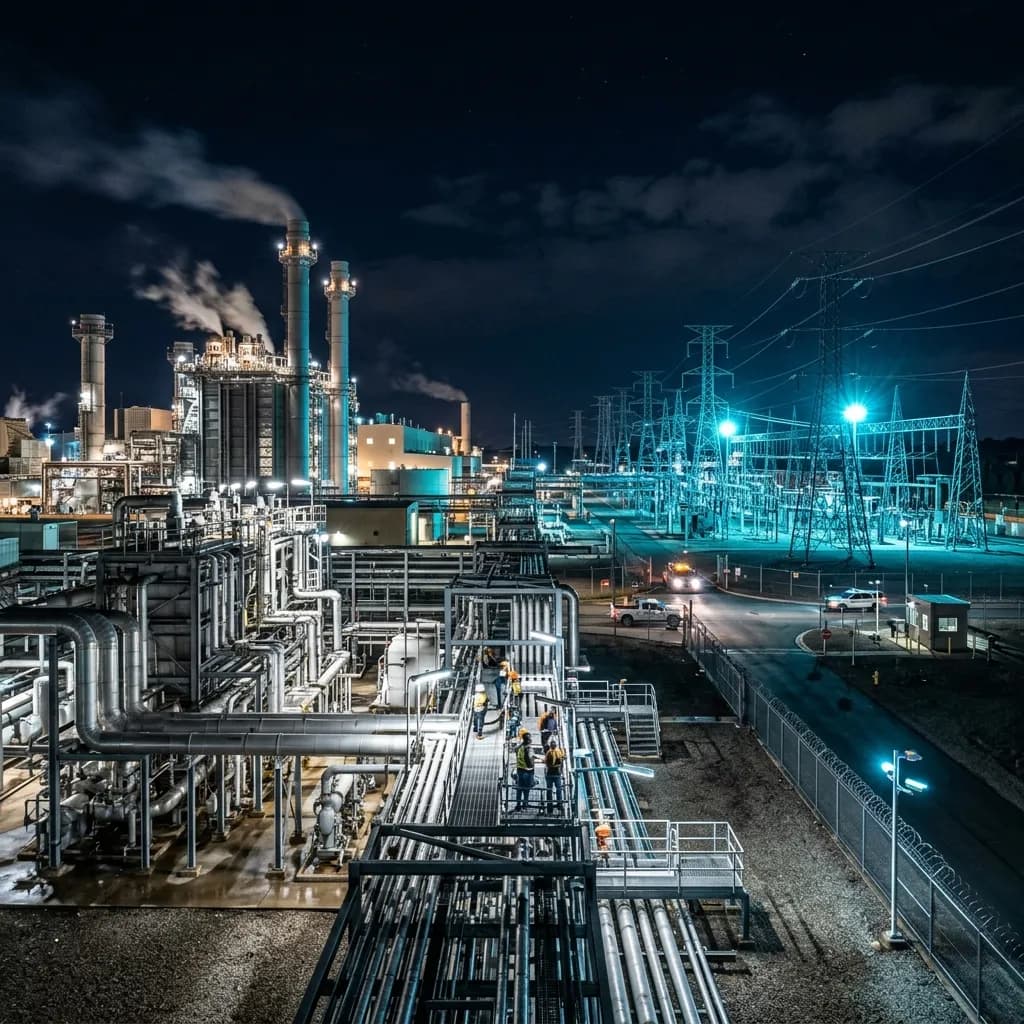
At critical infrastructure like refineries, power plants, and distribution facilities, an unauthorized drone can directly threaten worker safety, production continuity, and in some cases environmental safety.
Power plants, refineries, and large distribution facilities house both high-value assets and potentially hazardous processes. A drone flying unexpectedly overhead could be an accidental collision hazard, an attempt at industrial-espionage imagery, or part of a deliberate sabotage effort. Each scenario calls for a different response, but they share a common requirement: early detection.
Industrial facilities tend to feature large open areas alongside tall stacks, pipelines, and electrical distribution equipment — a layout that both helps and complicates radar deployment. Wide fields of view are easier to achieve, but metal structures and sources of electromagnetic interference can affect radar performance.
The Requirement for Continuous, Uninterrupted Operation
Energy facilities run 24/7, and their security systems are expected to match that continuity. This makes it critical for radar and sensor systems deployed in this sector to operate independently of weather conditions, remain remotely monitorable, and allow maintenance needs to be scheduled in advance.
Critical infrastructure regulations in many countries impose security standards specific to energy facilities. As a result, designing a drone security solution for this sector requires accounting for relevant regulations and reporting requirements alongside technical performance.
Let's Discuss a Radar Solution for Your Sector
Contact our team to select the right radar, sensor fusion, and response system for your facility's risk profile.
Get a Quote